
The German logo maker.
German builds long words by joining short ones, and its letters carry marks that collide in tight lockups. Five real examples, and what to check before you commit.
Write the brand name exactly as it should appear, in its own script. New accounts get 6 free credits, no card required, and each logo image uses 3.
What makes a German logo different
German compounds nouns freely, so a craft bakery becomes one word, Handwerksbäckerei. Brand names follow the same habit, and a long single word pushes a logo toward stacked lockups and monograms far more often than an English name does.
The letters add their own problems. Umlauts sit above the cap height and crowd anything set tight above them. The ß traditionally has no capital form, so all-caps settings usually replace it with SS, although a capital ẞ has been official since 2017. Each choice changes how the name looks and how it is searched.
5 German logos. What to refine.
Each logo below is shown exactly as generated, next to the direction behind it and a note on what a designer would change next.
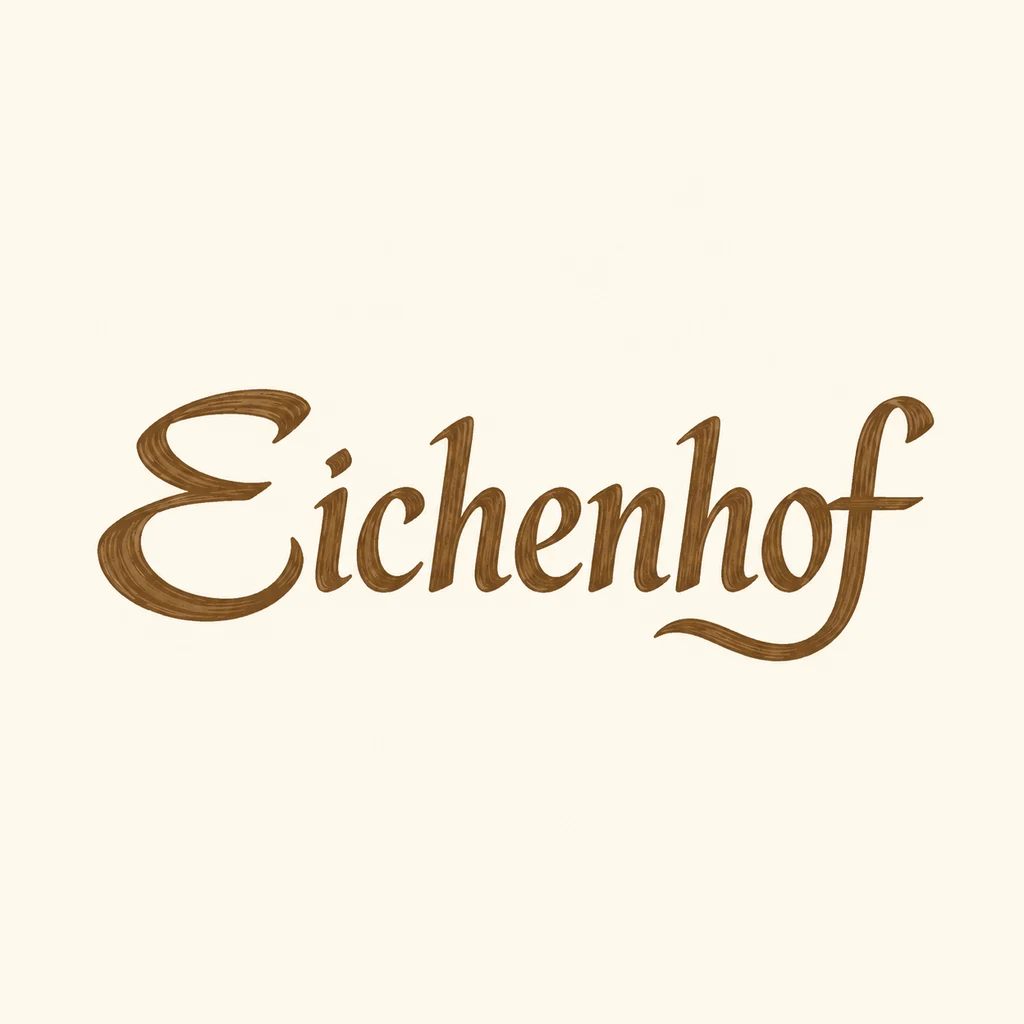
“A calligraphic German wordmark for a joinery workshop called Eichenhof, confident hand-lettered strokes with a woodcut feel, oak brown on bone.”
A confident script with a craft feel. The long tail on the f runs under the word, so check it does not collide with a tagline.
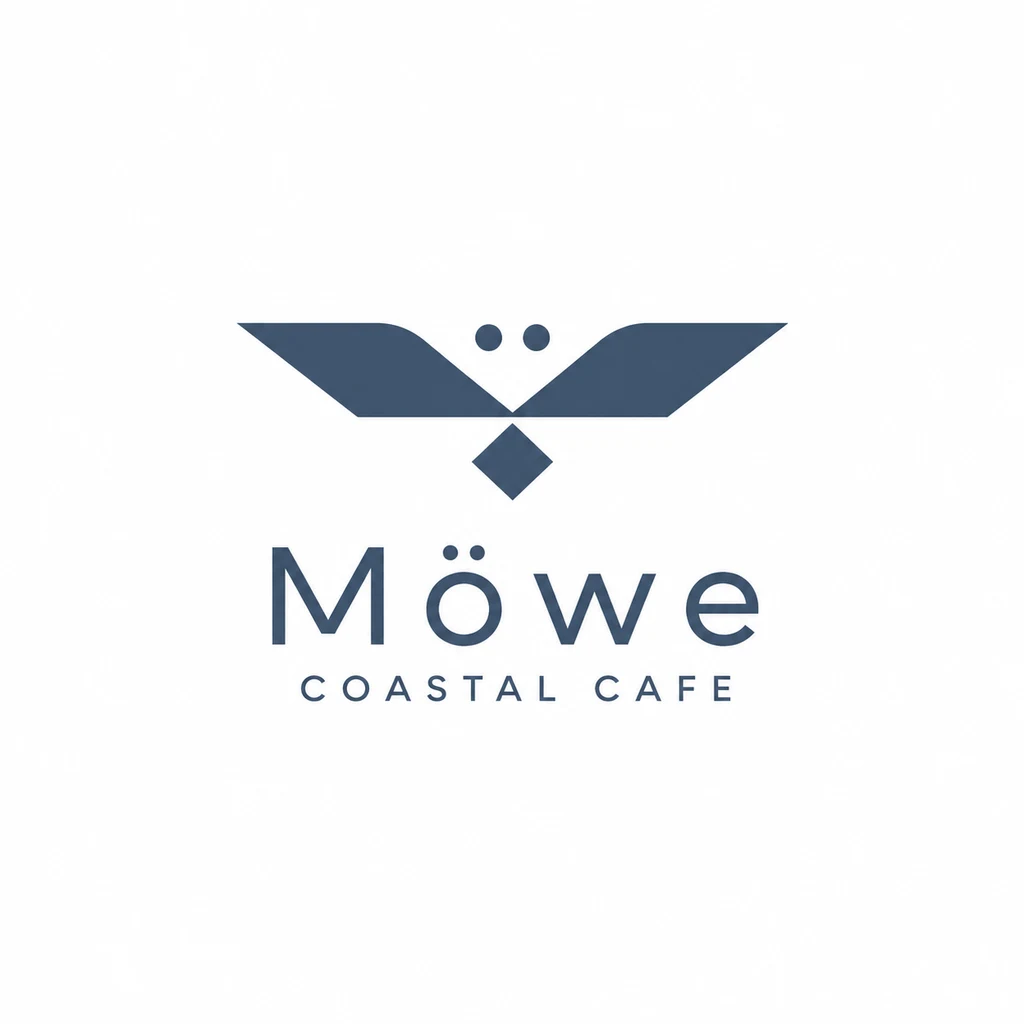
“A geometric German monogram for a coastal cafe called Möwe, the letter M reduced to a clean gull-wing mark with the umlaut integrated, slate blue on white.”
The umlaut dots become the gull’s eyes, which is a clever use of the letter. The English tagline undercuts a German brand; translate it or drop it.
“A German logo for an outdoor gear brand called Waldrand, a minimal treeline symbol above a clean wordmark, pine green on stone grey.”
Clear and legible, with a treeline that says outdoors at once. The trees are close together and will merge small; open the gaps.
“A German badge logo for a confectionery called Süßholz, the wordmark set inside a round sweet-shop seal with the ß clearly drawn, deep plum on cream.”
The ß is drawn correctly and holds its shape inside the seal. The wordmark nearly touches the edge; shrink it slightly for print tolerance.
“A clean modern German wordmark for a design studio called Nachtblau, a long compound set tight enough to stay legible small, midnight blue on pale grey.”
Nine letters set tight and still readable, with a custom N that joins the next letter. Check the join does not read as a ligature error at small sizes.
What to check in a German logo
- Give umlauts room. Ä, Ö and Ü need space above the capitals. Tight line spacing in a stacked lockup is where they collide.
- Decide how ß behaves in capitals. Süßholz in capitals becomes SÜSSHOLZ or SÜẞHOLZ. Pick one and use it everywhere, including the domain and social handles.
- Plan for length. Long compounds need a stacked version or a monogram for small spaces like app icons and social avatars.
- Break compounds with care. If a long name has to wrap, break it where the parts join, never mid-part.
Naming a German brand
German brand names often join two plain nouns into an image: Waldrand (forest edge), Eichenhof (oak courtyard). The compound carries the meaning, so a symbol can illustrate one half and let the wordmark carry the other.
Making a German logo with Logofai
Describe the business in one sentence and write the name in German exactly as it should be drawn, in quotes if it helps. Name the style you want, such as a calligraphic wordmark, a monogram or a badge, and two or three colors. Each run gives one to four options at 3 credits an image, and you can refine the one you like by describing the change.
Check every letter and mark with a native reader before you use a logo, whichever tool made it. Logofai itself is available in German: see the Logofai homepage in Deutsch. For the general guide to prompts and results, see the AI logo maker.
Good questions.
How should ß appear in an all-caps logo?
Either as SS, which is the traditional rule, or as the capital ẞ, official since 2017. Choose one and keep it consistent across the logo, domain and social handles.
Should a German brand have an English tagline?
Only if the brand sells mostly outside German-speaking markets. For a local business, a German tagline reads as more credible.
Your name, in your script.
Describe the business and write the name in German. See your first options in a minute.
6 free credits for new accounts, no card required.